.jpg)
Did you know that 85% of successful projects have strong stakeholder engagement at their core? Stakeholders can make or break a project, yet their management is often underestimated.
Why is stakeholder management important? Because it’s not just about ticking boxes; it’s about fostering collaboration and trust to achieve remarkable outcomes.
From navigating complex challenges to ensuring alignment across teams, effective stakeholder engagement lays the groundwork for projects that deliver lasting value and drive meaningful growth.
The benefits of effective stakeholder management in achieving project goals

An effective stakeholder management goes beyond communication; it builds trust, alignment, and lasting value, ensuring smoother projects and faster, goal-aligned decisions.
Below are the core benefits that demonstrate why stakeholder management is a cornerstone of successful project execution.
1. Improved alignment and goal clarity
When stakeholders understand a project’s objectives and how their roles contribute to the bigger picture, collaboration becomes seamless.
- Promotes shared understanding between teams and leadership
- Reduces confusion about priorities and deliverables
- Ensures all decisions align with strategic objectives
A well-aligned team can act decisively and consistently, minimizing costly rework or miscommunication later on.
2. Enhanced communication and collaboration
Stakeholder management fosters open channels of communication that bridge departments and decision-makers.
- Encourages continuous feedback loops to address issues early
- Strengthens relationships through effective team collaboration and alignment
- Builds a cooperative environment where ideas can evolve freely
Projects that maintain regular, transparent communication enjoy fewer bottlenecks and higher morale among contributors.
3. Greater trust and stakeholder engagement
Engaged stakeholders are more likely to support decisions and advocate for the project’s success.
- Builds credibility and reliability through consistent interaction
- Encourages active participation in reviews and milestones
- Transforms external parties into long-term partners rather than passive observers
Trust, once established, becomes a multiplier; it accelerates approvals, reduces friction, and boosts confidence in the project’s direction.
4. Stronger risk management and adaptability
Managing stakeholders effectively also minimizes risks by fostering proactive problem solving and shared accountability.
- Enables early detection of potential project threats
- Creates a framework for collaborative decision-making under pressure
- Supports contingency planning with diverse input and perspectives
Projects that integrate stakeholder insights are more resilient and adaptive to unforeseen challenges.
5. Increased project performance and financial impact
Stakeholder management directly affects measurable outcomes, from efficiency to profitability.
- Streamlines approvals and reduces costly project delays
- Improves resource utilization by aligning needs and priorities
- Boosts ROI through stronger execution and fewer revisions
Studies show that projects with strong stakeholder engagement are more than twice as likely to meet their goals and stay within budget.
6. Long-term sustainability and organizational growth
Beyond immediate project success, stakeholder management lays the foundation for enduring business stability.
- Builds lasting partnerships that provide strategic advantages
- Strengthens company reputation and public trust
- Encourages sustainable practices that balance economic and social impact
When organizations consistently nurture stakeholder relationships, they create ecosystems of support that sustain growth through change and competition.
It aligns people, processes, and priorities to create outcomes that are not only successful but sustainable. Projects thrive when stakeholders trust the process, share the vision, and commit to collective success.
Mastering stakeholder dynamics: understanding types and their influence
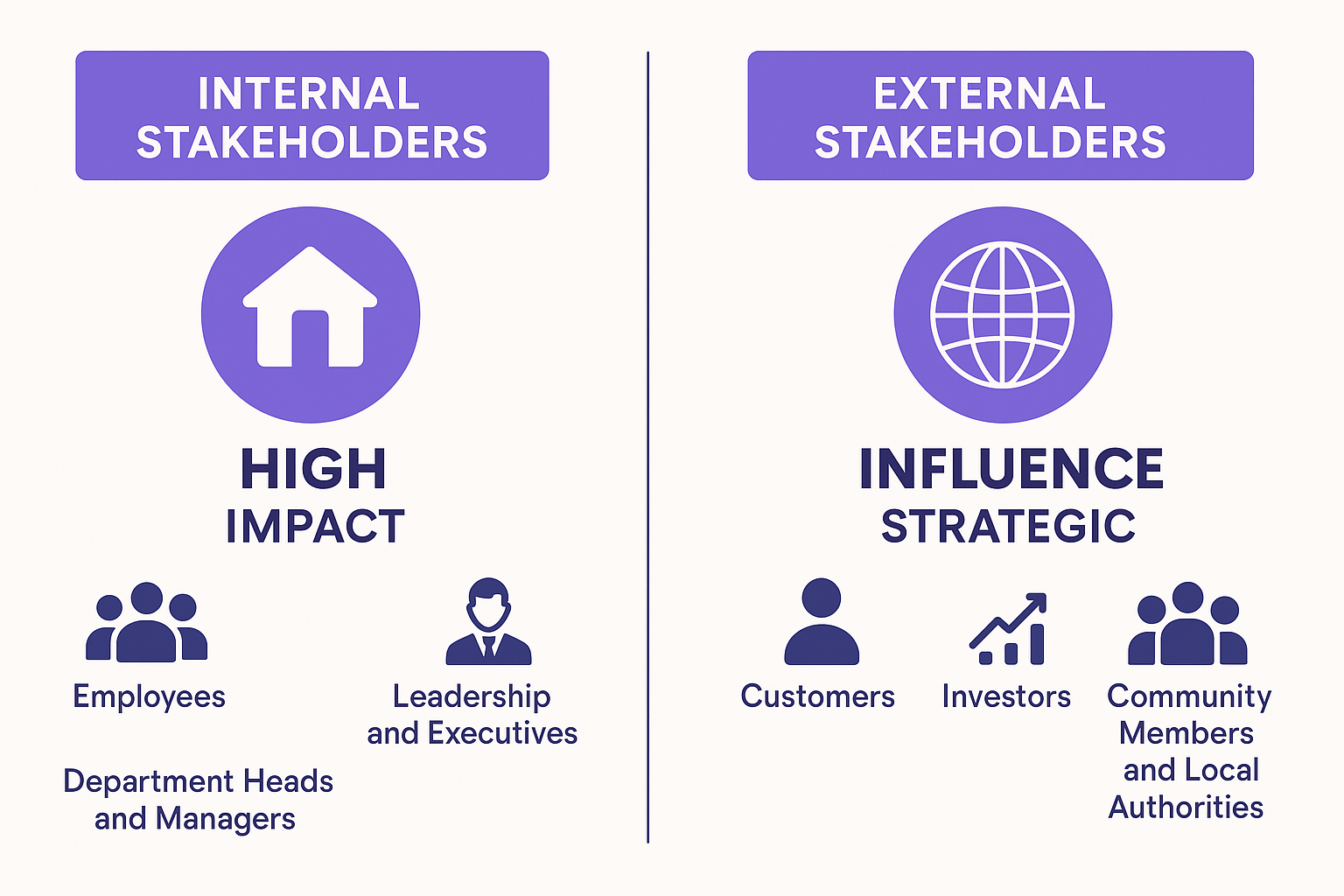
Stakeholder management starts with a deep understanding of who your stakeholders are and the level of influence they wield.
Stakeholders are not a one-size-fits-all group; they come with diverse priorities, expectations, and power to impact your project.
Internal stakeholders: The heart of your organization
Internal stakeholders are the individuals and groups within your organization who directly impact or are impacted by your projects. These include:
- Employees: They are often the backbone of project execution. Engaging employees effectively fosters motivation, ownership, and collaboration, ensuring that project goals are met efficiently.
- Leadership and Executives: Their influence stems from their authority and decision-making power. Securing leadership buy-in is crucial to aligning the project with organizational goals and ensuring resource allocation.
- Department Heads and Managers: They act as the bridge between employees and executives. Maintaining open communication with them ensures that team priorities align with broader objectives.
Influence level:
Internal stakeholders often have a high and immediate impact on your project. They control resources, set objectives, and determine success metrics. Failing to engage them properly can lead to project delays, resource conflicts, and misaligned goals.
Engagement strategy:
An effective engagement strategy keeps teams informed, motivated, and aligned to achieve project goals.
- Regular updates through internal communication tools (e.g., emails, meetings).
- Collaborative workshops to gather input and align on priorities.
- Recognition and rewards for employee contributions to keep morale high.
External stakeholders: the power beyond the organization
External stakeholders are outside your organization but significantly influence or are influenced by your project. Key external stakeholders include:
- Customers: They are the ultimate beneficiaries of your project. Engaging customers ensures that their needs and expectations are met, which directly affects satisfaction and loyalty.
- Investors: These stakeholders provide funding and demand a return on their investment. Clear communication and regular reporting are essential to maintain their trust and confidence.
- Community Members and Local Authorities: Particularly in public projects or large-scale initiatives, the community can shape public perception. Building goodwill and addressing concerns proactively is vital to avoid resistance or negative press.
Influence level:
External stakeholders may not be involved in day-to-day activities, but their influence is strategic and long-term. Investors and customers, for instance, can decide the project's financial viability, while community support can dictate public sentiment and compliance.
Engagement strategy:
An effective engagement strategy builds trust and transparency with key audiences, ensuring customers, investors, and communities feel heard and valued.
- For customers: Surveys, focus groups, and customer feedback mechanisms.
- For investors: Transparent financial updates and strategic presentations.
- For the community: Public meetings, environmental impact assessments, and corporate social responsibility initiatives.
By recognizing the unique needs and influence of both internal and external stakeholders, you can develop engagement strategies that resonate with their priorities and drive your project toward success.
Tailored stakeholder management ensures that all parties feel valued and heard, strengthening trust and commitment across the board.
Strategies for stakeholder management: Build your action plan

Building a powerful stakeholder management strategy means going beyond communication; it’s about understanding motivations, aligning goals, and maintaining trust. Here’s a concise, structured plan to manage stakeholders effectively.
1. Identify and map key stakeholders
Start by recognizing everyone who can influence or be impacted by your project.
- Internal: Executives, department heads, team members
- External: Customers, investors, suppliers, community
- Evaluate: Each stakeholder’s influence, interest, and impact on the project
A clear stakeholder map ensures focus on the most critical relationships.
2. Analyze and prioritize relationships
Not all stakeholders need equal attention; classify them using the Power/Interest Grid.
- High power, high interest: Engage closely with frequent updates
- High power, low interest: Keep informed with summaries
- Low power, high interest: Provide regular updates and collect feedback
- Low power, low interest: Monitor occasionally with light communication
Prioritizing helps allocate time and energy efficiently.
3. Develop a targeted communication strategy
Tailor your communication style and frequency for each stakeholder group.
- Executives: Monthly strategic briefings or reports
- Teams: Weekly progress check-ins or sprints
- External partners: Periodic updates on milestones and results
- Tools: Use dashboards or digital collaboration platforms for transparency
This ensures consistent information flow and stronger collaboration.
4. Build engagement and trust continuously
Trust grows from openness and reliability, making engagement ongoing, not reactive.
- Encourage feedback and active participation
- Share progress and celebrate milestones
- Resolve issues early through transparent dialogue
- Acknowledge contributions to strengthen loyalty
Stakeholders who feel valued become project advocates.
5. Monitor, measure, and improve
Track your stakeholder management performance and refine as needed.
- Engagement: Meeting attendance, response times
- Satisfaction: Feedback surveys or ratings
- Outcomes: Improved project delivery and team morale
Data-driven tracking helps improve engagement quality and sustain long-term success.
Empower your teams through stakeholder alignment
Effective stakeholder management is more than a strategic necessity; it’s the foundation for successful projects and sustainable growth. By aligning stakeholder needs and expectations with project objectives, you empower your team to make informed decisions, foster collaboration, and drive meaningful outcomes.
Strong stakeholder alignment reduces risks, enhances communication, and builds trust, ensuring smoother execution and better results.
Whether it’s engaging employees, satisfying customers, or securing investor confidence, the right approach to stakeholder management transforms challenges into opportunities.
_light%201.avif)